Cigarette Brings Justice for Marilyn Hickey
- Chantel Barone
- Sep 15, 2019
- 6 min read

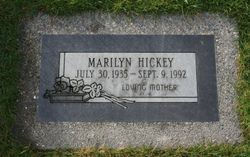
Marilyn Hickey was one of many who battle daily with mental and physical disabilities while receiving little income. Her circle of friends wasn't large, but it included many of Bremerton Washington's first respondents, who had assisted her through countless medical emergencies. Living alone with a seizure disorder, Bremerton paramedics and firefighters were frequently called to her aid. Often multiple times in a single day. While her non-compliance with her seizure medication peeved some paramedics, all were saddened by the news of her death. "She was as harmless as they come," commented Deputy Fire Marshal and former paramedic Scott Rappelye. Which is what made the circumstances of Marilyn's death all the more baffling. By all accounts, it seems Hickey was a sweet and friendly woman. Marilyn loved to laugh and joke and had a passion for Elvis Presley. Stan Plyler, a paramedic who saw Marilyn frequently, recalled joking with her about it during their ambulance rides. She was the kind of person that everyone loved. She spent most of her nights at local taverns, playing pool and enjoying the company. "I don't think it's as much for drinking as it is for acceptance and companionship," said Ray Wiggs when recalling his former patient. The taverns, and the people who frequented them, took Marilyn as she was.
It was at The Drift Inn Tavern, on the night of September 8th, 1992, that 57-year-old Marilyn Hickey was last seen alive. She arrived at the inn alone around 10:45, according to witnesses. She had been enjoying the night by shooting pool and mingling. Sometime during the night, she seemed to have befriended a man in his twenties. Witnesses described him as having collar-length auburn hair and a face they'd seen around before, but no one knew him by name. Marilyn stayed until the tavern closed for the night, and left with the unidentified man. At around 2:00AM Marilyn got into a cab with an unidentified man and drove to her home, an apartment on the 400 block of Chester Ave. about a mile from the Drift Inn Tavern.
When neighbors saw no sign of Marilyn Hickey over the following days, some began to worry. Aware of her health conditions, they feared she may have had a seizure or other medical emergency. On September 10th neighbors called the Bremerton Police Department who responded immediately. Paramedics had to use a pocket knife to gain access through a window. Once inside, first responders were shocked at what they saw. They found the 57-year-old woman sprawled, half-naked, lying on the living room floor. She had been dead for some time, after being both strangled and stabbed in the chest with a pair of scissors. The coroner estimated her death to have taken place sometime between 10 am and 12 pm on Thursday morning. Unfortunately, no one saw or heard anything strange or out of the ordinary. Police found a fingerprint, which did not belong to Marilyn, as well as semen which they collected for testing. Police immediately began working feverishly on the case. Sketches were made, and witnesses again recognized the man. However, still, no one could identify him.
In the local newspaper, the Sun, police asked for any information that could help them identify a suspect. What they did know was that the man was white, between the ages of 22 and 25, stood between 5' 8" and 5' 10" with a medium build and a weight of about 160LBS. His hair was cut at collar length and described as reddish-brown. Witnesses said he'd been wearing a dark waist-length jacket and blue denim pants the night he and Marilyn left the tavern together. What the first responders who had been so close with Marilyn didn't know, was that she had more of a family and more of a life than they realized.
Robert Hickey, Marilyn's son, received a call from his brother soon after her passing. Upon hearing the news, he couldn't believe it was real. “At first I thought he was BS-ing me; I said no way. She was only 57," Robert told KTBV News. But when the reality sunk in, it became all too real. Robert recalled in an interview how his life changed when he received that phone call. When he learned his mother was gone. "It tore me up that bad, where I was fighting all the time. It was terrible times.” The police continued diligently, tracking down leads and analyzing samples from the crime scene, but the man guilty of Marilyn Hickey's murder remained unidentified. The investigation went on for days, then weeks, then months... For 26 years, Marilyn Hickey's murder would go unsolved, her case growing cold.
In 2006, DNA samples recovered from the nearly ten-year-old crime scene were resubmitted to the Washington State Patrol Crime Laboratory for testing. This time, which better technology on their hands, they were able to generate a full profile. They ran this profile through their database to find that it matched a DNA sample collected from the 1994 murder of Cheryle Barratt in Idaho. But they still had no suspect. The DNA did not match any suspects in crime databases. However, they did have a new lead. Bremerton Police Detective Marty Garland immediately got in contact with an Idaho Detective and began comparing case files. Eventually, they found a match. He had never been considered a suspect, nor a person of interest. In the initial investigation, a friend's phone number was discovered on a piece of paper in Marilyn Hickey's purse. That friend — named Mike — told investigators Miller introduced him to Marilyn for help finding an apartment. Weeks later, an anonymous tip claimed that Mike revealed he knew that Miller sometimes went home with Hickey. However, the original investigators never made the connection. While his name was hardly mentioned, it was the only name that showed up in both case files.

On August 18, 2019, after years of waiting, Lee Robert Miller was brought to an Ada County courtroom, to take responsibility for what he had done. Both to Cheryle and Marilyn, as well as their families. Miller was charged with two counts of second-degree murder. His defense, Danica Comstock, made the case that he had suffered an abusive childhood which led to him experiencing rage-induced blackouts in his younger years. She added that he had been in an intimate relationship with each woman before the incidents occurred. The prosecution, however, focused on the brutality of the murders, and the judges agreed. Cheryle Barrett, a 49-year-old mother, was found dead in her bedroom. She had been stabbed and her throat had been slit. She'd been nearly decapitated in the brutal slaying. Similarly, he be-friended 57-year-old Marilyn Hickey before killing her in her home. He strangled the five-foot woman to death and stabbed her with scissors before proceeding to violate her lifeless body.
During the investigation, Miller was asked whether he had any other victims. The Judges were troubled when he simply replied, “I don’t know. I hope not.” When he was given a chance to apologize to the families he had shattered, he was quoted as saying, “I am very sorry for the pain that I’ve caused the families that have been affected by my past. I don’t expect them to ever forgive me. But I would just like them to know that I am very sorry.” This did not sway the Judges view of the case, however. “These are not murders with a single fatal kill,” Idaho's District Judge Stephen Hippler commented before handing down his sentence for the murder of Cheryle Barrett. Hippler ordered Miller to serve 25 years to life in prison. "She's had to do 25 years of waiting for today she's been waiting for justice for her mother all that time, and now we are here, she wants her waiting to finally and fully be over. She wants him to take his turn waiting for 25 years to pass," said the prosecutor, referring to Cheryle's daughter. Through a teleconference from Washington, Kitsap County Superior Court Judge Jeanette Dalton also focused on the brutality of the killings. “You have not demonstrated that you have the capacity for empathy,” Judge Dalton commented. She also told Miller that she believed had he been charged back in the 1990s, he would have been charged with first-degree murder, facing a much heavier sentence. But because he wasn’t uncovered until recently, there is less evidence available and memories have faded, giving him the chance for a second-degree murder plea. Dalton sentenced him to 17 years in jail - the maximum allowed in Washington - to be served consecutively with his sentence from Hippler. As of now, Miller faces a minimum of 42 years in prison.


![[UPDATE: Post-Mortem Photos]Ode To Doe: Tuscaloosa County Jane Doe](https://static.wixstatic.com/media/e9d8a3_f5f16192872a4042965cdae1f2671b9a~mv2.jpg/v1/fill/w_316,h_237,al_c,q_80,enc_avif,quality_auto/e9d8a3_f5f16192872a4042965cdae1f2671b9a~mv2.jpg)


![[UPDATE: Post-Mortem Photos]Ode To Doe: Tuscaloosa County Jane Doe](https://static.wixstatic.com/media/e9d8a3_f5f16192872a4042965cdae1f2671b9a~mv2.jpg/v1/fill/w_438,h_332,fp_0.50_0.50,lg_1,q_30,blur_30,enc_avif,quality_auto/e9d8a3_f5f16192872a4042965cdae1f2671b9a~mv2.jpg)
![[UPDATE: Post-Mortem Photos]Ode To Doe: Tuscaloosa County Jane Doe](https://static.wixstatic.com/media/e9d8a3_f5f16192872a4042965cdae1f2671b9a~mv2.jpg/v1/fill/w_296,h_224,fp_0.50_0.50,q_90,enc_avif,quality_auto/e9d8a3_f5f16192872a4042965cdae1f2671b9a~mv2.jpg)
Comments